sales@naturalin.com
 +86(731)84430651







Popular plant-based nutritional health ingredients: Echinacea Extract
Author : Naturalin Date : Click : times
In the wave of pursuing natural and healthy lifestyles, plant-based nutritional ingredients have gained increasing popularity among consumers. Among them, Echinacea Extract, derived from the Echinacea plant of the Asteraceae family, stands out as a well-known natural ingredient with potential health benefits. With a long history of traditional use and extensive modern research support, it has become a staple in the fields of dietary supplements, healthcare products, and even cosmetics.
Origin and Basic Overview
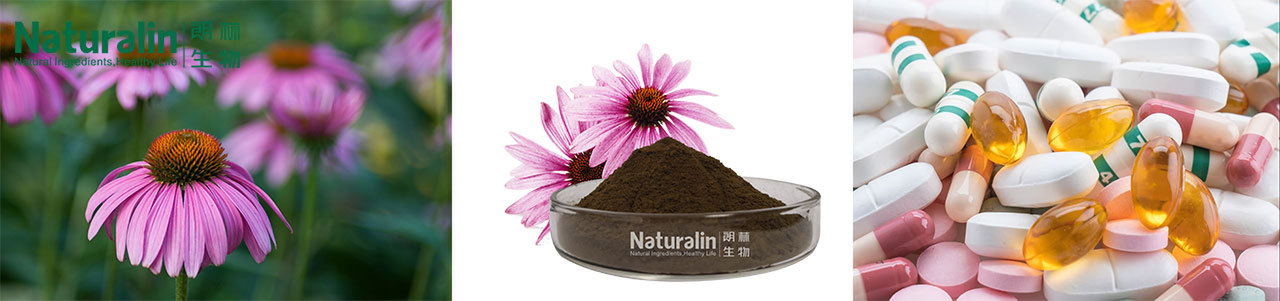
Echinacea, also known as purple coneflower, is a perennial herbaceous plant native to the areas east of the Rocky Mountains in the United States. The main species used for extracting active ingredients include Echinacea purpurea, Echinacea angustifolia, and Echinacea pallida. Native American tribes were the first to discover its medicinal value, using it to address respiratory tract infections, tooth pain, and other issues. Today, Echinacea is widely cultivated globally, and its extracts are obtained through standardized extraction processes from the plant's aerial parts, flowers, and roots, ensuring the retention of key bioactive components.
Key Bioactive Components
The health potential of Echinacea Extract is attributed to its diverse range of bioactive compounds, which work synergistically to exert effects. The main active components include:
1.Alkamides: Recognized as one of the core active substances, alkamides exhibit potential immunomodulatory properties by regulating pathways such as cannabinoid receptor 2 (CB2) and Toll-like receptor 4 (TLR4), contributing to the balance of the immune system.
2.Caffeic Acid Derivatives: Including chicoric acid, chlorogenic acid, and echinacoside, these compounds have antioxidant and anti-inflammatory effects, and are closely related to the potential immune-supporting function of Echinacea Extract.
3.Polysaccharides and Flavonoids: Polysaccharides can stimulate the activity of immune cells such as macrophages and natural killer cells, while flavonoids enhance the antioxidant capacity of the extract, helping to reduce oxidative stress in the body.
4.Polyphenols: As a broad category of bioactive substances in Echinacea, polyphenols have strong free radical-scavenging abilities. They work with other active components to enhance the extract's antioxidant and anti-inflammatory effects, and also play a positive role in protecting cell integrity and reducing oxidative damage to the body.
Application Forms of Echinacea Extract in Nutritional and Healthcare Fields
With the deepening of consumer awareness of natural health, Echinacea Extract, as a functional ingredient with immune-supporting potential, has formed a variety of application forms in the nutritional and healthcare field, adapting to different groups of people and usage scenarios, and meeting diverse consumer needs.
Dietary Supplement Forms
Functional Food Additives
Echinacea Extract is also used as a functional additive in food processing, integrating health benefits into daily diet. It can be added to health foods such as energy bars, nutritional powders, and herbal teas to enhance the functional attributes of the products. In the field of dairy products, a small amount of Echinacea Extract is added to yogurt, milk powder and other products to develop functional dairy products that help maintain immunity, expanding the application scenario of the extract from "supplements" to "daily food".
Compound Health Products
In order to exert synergistic health effects, Echinacea Extract is often compounded with other natural ingredients to develop multi-functional health products. For example, it is compounded with vitamin C, zinc, elderberry and other ingredients with immune-supporting effects to enhance the overall efficacy; it is compounded with chamomile, licorice and other soothing ingredients to develop products suitable for people with mild respiratory discomfort; it is also compounded with probiotics to regulate both immunity and intestinal health, meeting the comprehensive health needs of consumers.
Potential Health Benefits and Application Scenarios
Immune System Regulation
Echinacea Extract is most well-known for its potential role in supporting the immune system. Research indicates that its active components can enhance the phagocytic capacity of macrophages, increase the activity of natural killer cells, and regulate the production of cytokines such as IL-6, IL-1, and TNF-α, thereby helping the body maintain immune homeostasis. Some studies suggest that taking Echinacea Extract may slightly reduce the risk of catching a cold, though more clinical research is needed to confirm its effect on shortening the duration of colds.
Anti-inflammatory and Antiviral Potential
In preclinical studies, Echinacea Extract has shown inhibitory effects on certain respiratory pathogens such as Streptococcus pneumoniae and Haemophilus influenzae, as well as antiviral activity against herpes simplex virus, influenza virus, and rhinovirus. Its anti-inflammatory properties are also reflected in reducing the level of pro-inflammatory cytokines in excessive inflammatory responses, while increasing the production of anti-inflammatory cytokines like IL-10.
Diverse Application Fields
In the healthcare product industry, Echinacea Extract is commonly made into dietary supplements such as capsules, tablets, and drops, providing convenient immune support options for consumers. In the pharmaceutical field, it is used as an auxiliary ingredient in products for relieving respiratory tract infections and chronic pain. In cosmetics, its antioxidant and anti-inflammatory properties make it a popular additive in skincare products, contributing to skin health. Additionally, it is also applied in veterinary medicine and food additives, such as being used as a feed additive to enhance the immunity of livestock and poultry.
About Naturalin
Naturalin leads the development of "Echinacea Extract"social organization standards.With more than 20 years of experience exporting to global markets, we confidently bring you stable quality, competitive prices, and reliable services.If you have any things you want to know, please consult!
References
1. Ahmadi, F. Phytochemistry, Mechanisms, and Preclinical Studies of Echinacea Extracts in Modulating Immune Responses to Bacterial and Viral Infections: A Comprehensive Review. Antibiotics (Basel), 2024. PMC11504277.
2. National Center for Complementary and Integrative Health. Echinacea. 2024.
3. Shaanxi Jiuyuan Biotechnology Co., Ltd. Echinacea Extract. 2025.
4. Benefit-risk assessment of the squeezed sap of the purple coneflower (Echinacea purpurea) for long-term oral immunostimulation. PubMed, 2025.
5. Review: Alkamides from Echinacea as Complementary Immunomodulators: Potential for Integration with Synthetic Immunosuppressive Therapy. ebiotrade, 2026.
6. National Center for Biotechnology Information. Echinacea purpurea - Search Results. 2025.
Label:
- Next Page:How is milk thistle extract used in the field of nutrit…
-
 Return list
- Previous Page:The Wonder of Tea Powder