sales@naturalin.com
 +86(731)84430651







Vibrant Colors Inspired by Nature
Author : Naturalin Date : Click : times
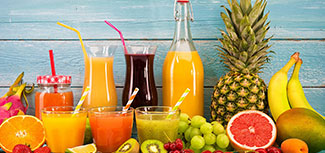
As "clean label" shifts from a mere selling point to an everyday expectation, natural colors are becoming a pivotal element in food and beverage innovation. Consumers seek hues inspired by nature, while formulators must balance these choices with stability, regulatory compliance, and practical production requirements.
According to a report by Grand View Research, 75% of consumers worldwide are willing to pay a premium for clean-label products, including those free from artificial colors. The report also indicates that natural food colors are experiencing significant growth. Valued at $2.3 billion in 2025, the global natural food color market is projected to grow from $2.5 billion in 2026 to $4.1 billion in 2033, representing a compound annual growth rate (CAGR) of 7.1% from 2026 to 2033.
The following are key ingredients in the field of natural food colors:
Phycocyanin- Bringing “Natural Blue” into Formulations
Phycocyanin is a natural blue colorant derived from spirulina. It is a protein-bound pigment with a vivid blue tone and water-soluble characteristics, making it one of the more recognizable natural blue sources.
Function: It is mainly used for food coloring and can give products a bright, fresh blue hue. Through blending, it can also be used to create blue-green, purple-blue, and other shades. In practical applications, formulation optimization based on pH, heat treatment conditions, and shelf life is needed to maintain stable color performance.
Applications: It is suitable for beverages, dairy products, ice cream, confectionery, jelly, bakery decorations, and plant-based products. It is particularly well suited to beverage and dessert formulations that aim to create visual differentiation with natural blue.
Sodium Copper Chlorophyllin-A Practical Choice for Natural Green
Sodium copper chlorophyllin is a water-soluble green colorant with a tone close to the natural green of plant leaves. It is suitable for product systems that require a fresh, soft green expression.
Function: It provides green coloring for food and can be used to create various shades from tender green to deep green. It offers good application flexibility in formulations and can be readily blended with other natural colorants. Specific usage should follow relevant regulations and product process conditions.
Applications: It can be used in beverages, confectionery, jelly, pastry, dairy products, condiments, and plant-based foods. It is suitable for product development scenarios that require natural green visual expression while also considering production feasibility.
β-Carotene: Combining Red Tones with Nutritional Fortification
β-carotene is a common natural yellow-orange colorant and a provitamin A. It is available in different forms, including oil-soluble and water-dispersible types, making it adaptable to a wide range of food systems.
Function: It can provide warm tones ranging from yellow to orange for food coloring and can also be used as a nutritional fortification ingredient. In formulations, an appropriate form can be selected according to the system to improve dispersibility and color stability.
Applications: It is suitable for beverages, dairy products, oil-based products, bakery goods, confectionery, ice cream, and meat products. It is ideal both for products requiring yellow-orange tones and for formulation development with vitamin A fortification needs.
The global market for natural food colorants continues to grow, driven primarily by the trend toward "clean label" products, stricter regulations on synthetic colorants in various countries, and the demand for formulation upgrades as food brands proactively replace artificial colors.
Label:
 Return list