sales@naturalin.com
 +86(731)84430651





Application of Garlic Extract in Feed Additives
Author : Naturalin Date : Click : times
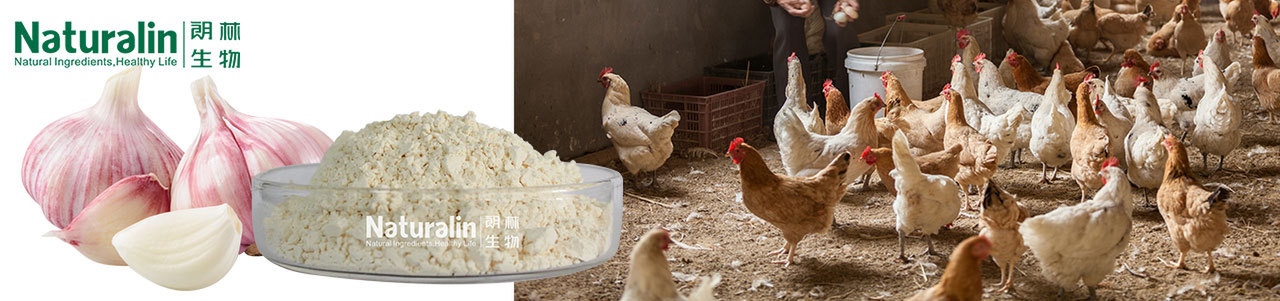
With the global focus on food safety and the phasing out of antibiotic growth promoters in animal husbandry, natural plant extracts have become ideal alternatives. Garlic extract, rich in bioactive compounds like allicin, has attracted wide attention in the feed industry for its multiple benefits to animal growth, health and product quality. This article explores its core value, action mechanisms, practical applications and market prospects, highlighting its role in advancing sustainable animal husbandry.
The Core Advantages: Why Garlic Extract Stands Out
Mechanisms of Action: How Garlic Extract Benefits Animal Husbandry
1. Regulating Gut Microecology and Improving Nutrient Utilization
For ruminants, garlic extract acts as a urease inhibitor, reducing ammonia nitrogen production in the rumen and regulating the rumen microbial community by inhibiting harmful bacteria and promoting beneficial ones, thus improving the utilization efficiency of non-protein nitrogen. For monogastric animals and aquatic products, it can also balance intestinal flora, promote the proliferation of beneficial bacteria (such as lactic acid bacteria) and inhibit pathogenic bacteria (such as Vibrio), optimizing intestinal structure and nutrient absorption efficiency.
2. Enhancing Immunity and Antioxidant Capacity
Garlic extract can significantly enhance animal immunity and antioxidant capacity. In broiler breeding, adding garlic powder increases blood immunoglobulin levels and enhances humoral immunity. For aquatic animals like shrimp, it boosts the activity of non-specific defense enzymes and activates the endogenous antioxidant system, reducing oxidative stress damage caused by environmental factors such as low temperatures. It also lowers the level of malondialdehyde (an oxidative stress marker) in animal blood, maintaining the balance of the body's oxidative system.
3. Promoting Growth Performance and Improving Product Quality
By improving nutrient utilization and regulating physiological functions, garlic extract effectively promotes animal growth. Adding garlic by-products or extracts to ruminant diets can increase average daily gain and improve feed conversion ratio. For broilers, garlic powder supplementation enhances growth performance and improves carcass traits. In terms of product quality, it increases the content of beneficial fatty acids and essential amino acids in meat and milk, making animal products more beneficial to human health.
4. Reducing Environmental Pollution
A prominent advantage of garlic extract in ruminant breeding is its ability to reduce methane emissions. Its organosulfur compounds inhibit the growth of methanogenic archaea, which is in line with the global goal of carbon neutrality in animal husbandry.
Market Prospects and Future Trends
In the future, the development of garlic extract feed additives will focus on three key directions: first, optimizing extraction processes (such as supercritical CO₂ extraction and water-oil miscible extraction) to further improve the purity and stability of active components; second, developing customized products for different species and growth stages, such as high-temperature-resistant coated products to adapt to feed processing conditions; third, strengthening research on the synergistic effects of garlic extract with other natural additives (such as thyme and probiotics) to enhance comprehensive application effects. With the deep integration of technological innovation and industrial chains, the application scenario of garlic extract will be further expanded, and it is expected to form a "garlic extract +" multi-field application pattern covering animal health, food safety and environmental protection.
Conclusion
About Naturalin
References
1. Wang J, Zhao S. Allicin promotes the conversion of urea nitrogen to microbial nitrogen by inhibiting urease activity and regulating the bovine rumen microbiome[J]. Microbiome, 2025.
2. Review: Potential use of garlic products in ruminant feeding[J]. PMC, 2025, PMID: 38976412.
3. Effects of Dietary Garlic Skin Based on Metabolomics Analysis in the Meat Quality of Black Goats[J]. Foods, 2025, 14(10): 1911.
4. 2025-2030 Garlic Extract Project Investment Value Analysis Report[R]. Originality Document, 2025.
5. Optimizing broiler performance, carcass traits, and health: evaluating thyme and/or garlic powders as natural growth promoters in antibiotic-free diets[J]. PMC, 2025, PMID: 38004668.
Label:
 Return list