News
Natural Blue Colorant: Butterfly Pea Flower Extract
Author : Naturalin Date : Click :
times
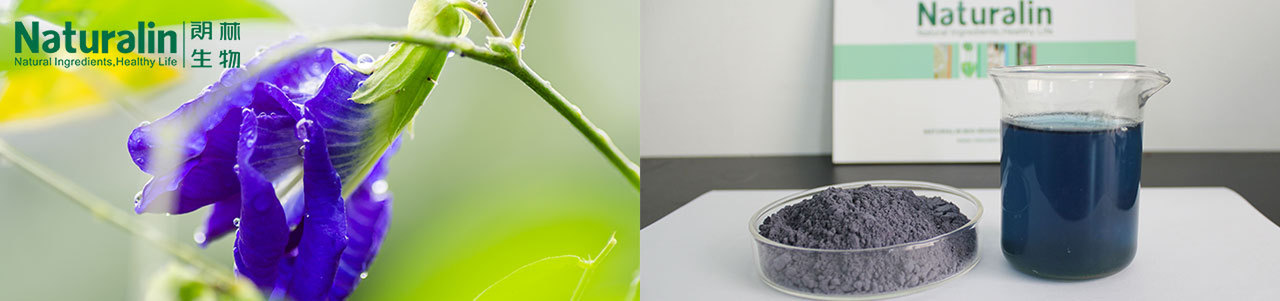
As consumers and industries increasingly prioritize clean labels and natural ingredients, the food and beverage sector has been actively seeking high-quality natural colorants. Among all natural hues, blue has long posed a unique challenge—until butterfly pea flower extract emerged as a breakthrough solution. Derived from the vivid blue petals of the Clitoria ternatea plant, this natural blue colorant not only boasts striking visual appeal but also delivers functional benefits, solidifying its role as a game-changer in both culinary and industrial applications. In 2025, the FDA approved Butterfly Pea Flower Extract for use as a food colorant.
The Source: Butterfly Pea Flower & Its Coloring Secret
To understand this colorant, we first turn to its source: the butterfly pea flower. Native to tropical regions of Southeast Asia and Africa, this leguminous plant (from the Fabaceae family) has been integrated into traditional cuisines and herbal remedies for centuries. Its deep lavender-blue to violet petals hold the key to its color magic, thanks to a high concentration of anthocyanins—specifically polyacylated anthocyanins called ternatins, which are derivatives of delphinidin. These water-soluble pigments not only create the flower’s intense blue shade but also offer excellent stability, a critical attribute for commercial application.
Magical pH-Dependent Color Shift
One of the most captivating traits of butterfly pea flower extract is its ability to change color based on pH levels. In neutral to slightly acidic environments (pH 3.2 to 5.2), it displays a bright denim blue hue. When introduced to more acidic ingredients like lemon juice or citrus, it transforms into a vivid purple or pink. This chameleon-like property not only enhances the visual appeal of dishes and drinks but also makes it an engaging, interactive ingredient for both home cooks and professional chefs. For instance, a simple butterfly pea flower tea shifts from deep blue to vibrant purple with a squeeze of lemon, crafting a memorable sensory experience.
Excellent Performance Traits
Beyond its visual allure, butterfly pea flower extract boasts impressive performance characteristics that distinguish it from other natural blue colorants. Unlike spirulina (another natural blue alternative), it offers exceptional heat stability, making it suitable for a wide range of processed foods requiring cooking or pasteurization. It also maintains strong storage stability; studies have shown that blue rice colored with the extract retains its hue effectively during storage. Additionally, the extraction process is straightforward: hot water extraction of petals works well for food applications, while further processing ensures purity for commercial use.
Versatile Industry Applications
Butterfly pea flower extract boasts diverse applications across the food, beverage, and nutraceutical industries. In Southeast Asia, it is a staple in traditional dishes—most notably blue rice, where the extract infuses grains with a striking blue shade while boosting their total phenolic and anthocyanin content. It is also widely used in beverages, ranging from caffeine-free herbal teas and sports drinks to colorful cocktails and fruit smoothies. In the confectionery sector, it adds vibrant hues to gummy candies, hard candies, and chewing gum. The recent expansion of FDA approval has further broadened its utility, encompassing snacks like plain potato chips, corn chips, and snack mixes, as well as dairy products such as yogurt and frozen desserts.
Beyond Color: Functional Benefits
Another key advantage of butterfly pea flower extract lies in its functional benefits. The anthocyanins and phenolics it contains exhibit significant antioxidant activity, helping to combat free radicals and enhance the nutritional profile of the products it is added to. Studies have linked these compounds to potential health benefits, including neuroprotective effects, anti-inflammatory properties, and support for skin and eye health. For consumers increasingly seeking “functional foods” that offer more than basic nutrition, this dual value—color and nutrition—makes butterfly pea flower extract doubly appealing.
Regulatory Approval & Industry Recognition
Industry recognition of butterfly pea flower extract as a safe and reliable natural colorant has grown steadily. In 2021, the U.S. FDA first approved it as a color additive, and in 2025, expanded this approval to cover additional food categories—confirming its safety and versatility. This approval marks a significant milestone for the food industry, as it fills a long-standing gap in the natural color palette.
About Naturalin
Founded in 2006, Naturalin is committed to the manufacturing, innovation, and sales of natural ingredients. We provide one-to-one services and customized solutions to meet the specific needs of our customers.
· Global direct procurement of raw materials
· Customized solution
· Reliable quality control
· High-quality sales and service
References
1. Manee Chot, O., Hah Or, W., Praju Kaew, K., Tapong, N., & Bubaka, S. (2023). A natural blue colorant from butterfly pea (Clitoria ternatea) petals for traditional rice cooking. SpringerLink.
2. U.S. Food and Drug Administration. (2025, May 9). FDA Approves Three Food Colors from Natural Sources.
3. Smith, M. L. (2025, February 24). Butterfly Pea - A Natural Food Coloring. Penn State Extension.
4. Monash University. Anthocyanins From Clitoria ternatea Flower: Biosynthesis, Extraction, Stability, Antioxidant Activity, and Applications.
5. Food and Drug Administration. (n.d.). CFR-2022-title21-vol1-sec73-69. GovInfo.
Label:
Copyright 2006-2025 Naturalin Bio-Resources Co., Ltd - Private Policy
* The statements on the website have not been evaluated by the Food and Drug Administration. These products are not intended to diagnose, treat, cure or prevent any disease.