sales@naturalin.com
 +86(731)84430651







Natural Antioxidant Ingredient: Astaxanthin
Author : Naturalin Date : Click : times
These highly reactive free radicals assault cellular components like DNA, proteins, and lipids, laying the groundwork for chronic conditions such as cardiovascular diseases, neurodegenerative disorders, age-related macular degeneration, and certain cancers. Amid the growing demand for natural, safe antioxidant solutions, astaxanthin—a lipid-soluble carotenoid abundant in microalgae, crustaceans, and salmon—has risen to prominence. Boasting antioxidant potency far surpassing that of vitamin C, vitamin E, and beta-carotene, coupled with an excellent safety record, astaxanthin has become a focal point of research in nutrition and wellness.
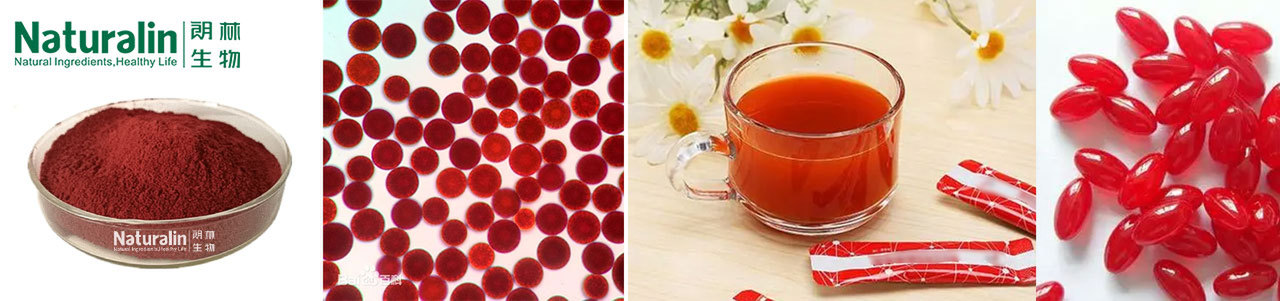
How Astaxanthin Exerts Its Antioxidant Effects
Astaxanthin’s powerful antioxidant action stems from its ability to target multiple aspects of oxidative stress, forming a comprehensive defense system for cells through diverse mechanisms.
Additionally, astaxanthin bolsters the body’s endogenous antioxidant system. The human body naturally produces a network of antioxidant enzymes, including superoxide dismutase (SOD), catalase (CAT), and glutathione peroxidase (GSH-Px), which work in tandem to eliminate excess ROS. Astaxanthin enhances this defense by upregulating the genes responsible for synthesizing these enzymes, thereby increasing their activity levels. For instance, it promotes SOD production, which accelerates the conversion of superoxide anions into hydrogen peroxide (H₂O₂), while also boosting CAT and GSH-Px activity to break down H₂O₂ into harmless water and oxygen. This synergy between direct free radical scavenging and enhanced endogenous defenses creates a robust “double barrier” against oxidative stress.
Furthermore, astaxanthin safeguards cell membranes by inhibiting lipid peroxidation. Cell membranes are rich in unsaturated fatty acids, which are highly vulnerable to oxidative attack—leading to lipid peroxidation, membrane damage, and disrupted cellular function. As a lipid-soluble compound, astaxanthin easily penetrates cell membranes and accumulates in the lipid bilayer. Its molecular structure stabilizes the membrane by interacting with phospholipids, reducing fluidity and shielding unsaturated fatty acids from free radical damage. It also intercepts peroxyl radicals during the lipid peroxidation chain reaction, halting further damage and preserving membrane integrity and functionality.
Astaxanthin’s Roles in Supporting Health
Leveraging its potent antioxidant and cell-protective properties, astaxanthin offers diverse applications in promoting wellness and addressing oxidative stress-related conditions.
In eye health, astaxanthin provides critical protection for retinal cells. The retina is constantly exposed to light, which stimulates the production of large quantities of singlet oxygen and other free radicals—key contributors to age-related macular degeneration (AMD) and cataracts. Astaxanthin can cross the blood-retinal barrier, accumulate in retinal tissue, and scavenge these harmful free radicals. It also inhibits lipid peroxidation in retinal cell membranes and reduces ocular inflammation. Clinical research indicates that astaxanthin supplementation can improve visual acuity, alleviate eye fatigue (such as dryness, soreness, and blurred vision from prolonged screen use), and lower the risk of AMD and cataracts, supporting long-term ocular health.
For cardiovascular wellness, oxidative stress is closely linked to the development of atherosclerosis, hypertension, and other cardiovascular diseases. Excess ROS damages vascular endothelial cells, promotes the oxidation of low-density lipoprotein (LDL) into oxidized LDL (ox-LDL)—a major trigger for atherosclerotic plaque formation—and induces vascular inflammation. Astaxanthin protects vascular endothelial cells from oxidative damage, inhibits LDL oxidation, and reduces cholesterol deposition in vessel walls. It also enhances vascular elasticity by mitigating oxidative stress-induced stiffness and regulates lipid levels. Additionally, astaxanthin exhibits antiplatelet aggregation effects, reducing thrombosis risk—collectively lowering the incidence of cardiovascular diseases.
In skin health, astaxanthin acts as a natural anti-aging and protective agent. UV radiation from sunlight is a primary source of skin oxidative stress, generating ROS that damage skin cells, break down collagen and elastin, and cause wrinkles, sagging, and hyperpigmentation. Astaxanthin’s strong antioxidant activity scavenges UV-induced free radicals, reduces skin cell oxidative damage, and inhibits matrix metalloproteinases (MMPs)—enzymes that degrade collagen. It also strengthens the skin’s barrier function by protecting the lipid bilayer of skin cells and alleviates UV-induced inflammation. Furthermore, astaxanthin improves skin hydration, elasticity, and radiance, delaying signs of aging and mitigating sunburn damage.
For cognitive health, oxidative stress and inflammation in the brain are key drivers of neurodegenerative diseases like Alzheimer’s and Parkinson’s. The brain’s high metabolic activity and abundance of unsaturated fatty acids make it particularly susceptible to oxidative damage. Astaxanthin can cross the blood-brain barrier, scavenge free radicals in brain tissue, and reduce oxidative stress. It also inhibits the production of pro-inflammatory cytokines, easing neuroinflammation. Studies show that astaxanthin protects neurons from oxidative damage, enhances mitochondrial function (critical for neuronal energy supply), and improves memory and cognitive performance—making it a promising natural ingredient for supporting brain health and reducing neurodegenerative disease risk.
About Naturalin
If you have any needs, please contact:sales@naturalin.com
References
1. Guerin, M., Huntley, M. E., & Olaizola, M. (2003). Haematococcus pluvialis, the microalga producing the highest amount of astaxanthin. Critical Reviews in Biotechnology, 23(3), 173-196.
2. Kamath, S. D., Jiang, A., & Lin, H. (2008). Astaxanthin: Sources, extraction, stability, biological activities and its commercial applications—A review. Journal of Food Science and Technology, 45(1), 10-16.
3. Park, J., Lee, J., & Kim, H. (2010). Astaxanthin protects retinal pigment epithelial cells from oxidative stress-induced cell death via the Nrf2/ARE pathway. Investigative Ophthalmology & Visual Science, 51(12), 6229-6236.
4. Ambati, R. R., Phang, S. M., Ravi, S., & Aswani, S. (2014). Astaxanthin: Sources, bioavailability, and brain health benefits. Marine Drugs, 12(1), 120-158.
5. Liu, J., Liu, Y., & Zhang, Y. (2018). Astaxanthin improves cardiovascular health by reducing oxidative stress and inflammation. Journal of Nutritional Biochemistry, 52, 1-8.
6. Bhuvaneswari, V., & Nagini, S. (2020). Astaxanthin: A promising therapeutic agent for age-related skin disorders. Journal of Cosmetic Dermatology, 19(3), 643-651.
 Return list