sales@naturalin.com
 +86(731)84430651







Gift from nature: Natural colorants
Author : Naturalin Date : Click : times
Outstanding Natural Colorants and Their Core Advantages
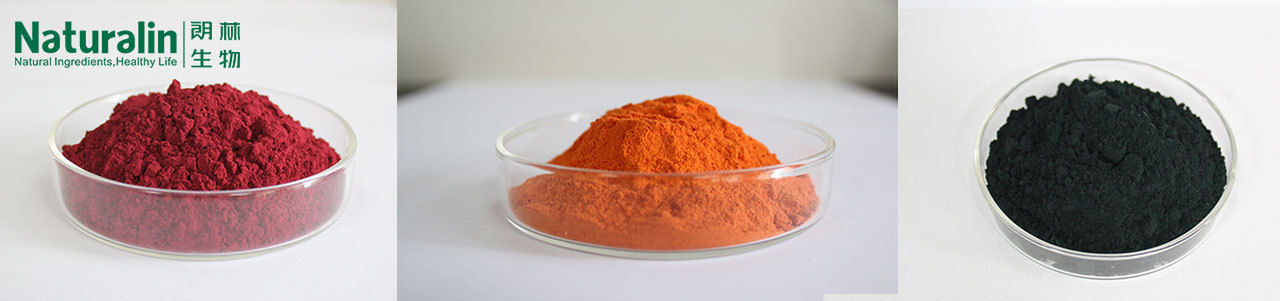
Lycopene is a carotenoid natural colorant renowned for its intense red hue. It is primarily found in ripe red fruits and vegetables, with tomatoes being the most abundant and widely used source—especially in tomato paste, tomato juice, and concentrated tomato products where lycopene content is significantly concentrated. Other natural sources include watermelons, grapefruits, and papayas. As a lipophilic compound, lycopene exhibits excellent stability under proper processing and storage conditions, making it suitable for a variety of product formulations.
Functional Mechanisms and Advantages:The core value of lycopene lies in its potent antioxidant activity—far exceeding that of vitamin C, vitamin E, and other common antioxidants. Its molecular structure contains multiple conjugated double bonds, enabling it to efficiently scavenge free radicals in the human body, neutralize reactive oxygen species (ROS), and reduce oxidative damage to cells and DNA. This antioxidant capacity contributes to its role in supporting cardiovascular health by inhibiting lipid peroxidation in blood vessels, reducing the risk of atherosclerosis. Additionally, lycopene has been extensively studied for its potential to support prostate health, as research suggests it may inhibit the growth of abnormal cells in the prostate gland. In terms of coloration, lycopene imparts a bright, natural red tone to products, avoiding the potential health risks associated with synthetic red colorants, and is widely recognized for its safety.
2. Lutein
Lutein is a xanthophyll natural colorant, presenting a bright yellow to orange hue. Its primary and most commercially significant source is the marigold flower (Tagetes erecta), which is cultivated globally for lutein extraction due to its exceptionally high content of lutein esters—compounds that can be efficiently converted into free lutein during processing.
Functional Mechanisms and Advantages:Lutein is best known for its role in supporting eye health. It has a high affinity for the macula of the retina, where it accumulates to form a "protective barrier." By filtering out harmful blue light and absorbing ultraviolet radiation, lutein reduces oxidative stress in retinal cells, thereby alleviating eye fatigue and lowering the risk of age-related macular degeneration (AMD) and cataracts. Its antioxidant properties also extend to overall health, as it helps reduce systemic inflammation and protect cells from free radical damage. In applications, lutein’s warm yellow-orange shade is widely used in food and beverages, adding a natural, appetizing color without compromising nutritional value—making it a preferred choice for health-conscious product formulations.
3. Sodium Copper Chlorophyllin
Sodium Copper Chlorophyllin is a natural colorant derived from chlorophyll, the green pigment essential for photosynthesis in plants. It is obtained through the extraction and modification of chlorophyll from sources such as mulberry leaf,spinach and alfalfa, followed by copper ion chelation to enhance stability and water solubility. This modification transforms the fat-soluble chlorophyll into a water-soluble compound, expanding its range of applications. Sodium Copper Chlorophyllin exhibits a vivid green color, ranging from bright green to dark green, with excellent stability under light, heat, and pH variations.
Functional Mechanisms and Advantages:Beyond its colorant properties, Sodium Copper Chlorophyllin possesses notable biological activities. It has been shown to have detoxifying effects, aiding in the binding and excretion of harmful substances such as heavy metals in the body. Additionally, it exhibits mild anti-inflammatory and antibacterial properties, making it useful in oral care products to reduce bad breath and inhibit the growth of oral bacteria. In terms of coloration, its vibrant and stable green hue is widely used in food, cosmetics, and pharmaceuticals—providing a natural alternative to synthetic green colorants while offering additional health benefits.
Applications in Key Industries
Natural colorants are extensively used in the food and beverage industry to enhance product appearance and meet consumer demand for clean labels. Lycopene is added to tomato-based products, fruit juices, candies, and dairy products (such as yogurt and milk drinks) to impart a rich red color. Lutein is utilized in baked goods, snacks, infant formula, and functional beverages to provide a natural yellow-orange tint while fortifying nutritional value. Sodium Copper Chlorophyllin is employed in green teas, sports drinks, ice cream, and vegetarian food products to achieve an attractive green color, replacing synthetic alternatives like Fast Green FCF.
Cosmetics and Personal Care
In cosmetics, natural colorants are favored for their safety and compatibility with the skin. Lycopene is incorporated into anti-aging creams, serums, and sunscreens due to its antioxidant properties, helping to protect the skin from UV damage and reduce the appearance of fine lines. Lutein is added to eye creams and facial moisturizers to support skin health and provide a subtle natural glow. Sodium Copper Chlorophyllin is used in lip balms, body washes, and facial masks for its green tint and mild antibacterial effects, catering to consumers seeking natural and skin-friendly products.
Natural colorants also play a vital role in pharmaceuticals and nutraceuticals, where both color stability and safety are critical. Lycopene and lutein are commonly used in dietary supplements (such as softgels, capsules, and tablets) to deliver their health benefits while providing a visually appealing appearance. Sodium Copper Chlorophyllin is utilized in oral medications, health drinks, and detox supplements, leveraging its colorant properties and detoxifying effects.
Conclusion
About Naturalin
References
1. Stahl, W., & Sies, H. (2021). Lycopene: A carotenoid with potent antioxidant and anti-inflammatory properties. Archives of Biochemistry and Biophysics, 709, 108865.
2. Bone, R. A., & Landrum, J. T. (2022). Lutein and zeaxanthin in eye health: From biochemistry to clinical applications. Critical Reviews in Food Science and Nutrition, 62(15), 3980-3994.
3. Liu, Y., Zhang, L., & Wang, J. (2023). Sodium copper chlorophyllin: Extraction, modification, and applications in food and pharmaceuticals. Journal of Food Science and Technology, 60(4), 1123-1135.
4. Rodriguez-Amaya, D. B. (2020). Natural food colorants: Sources, stability, and applications. Food Reviews International, 36(5), 381-401.
5. Sharifi-Rad, M., et al. (2022). Carotenoids as natural colorants and functional ingredients: A review of their sources, extraction, and biological activities. Journal of Functional Foods, 92, 105489.
6. Gama, F. M., & de Carvalho, A. F. (2023). Marigold (Tagetes erecta) as a sustainable source of lutein: Extraction technologies and applications. Journal of Agricultural and Food Chemistry, 71(12), 4890-4899.
- Next Page:Popular health ingredients: Coenzyme Q10
-
 Return list
- Previous Page:How do plant extracts promote emotional health?